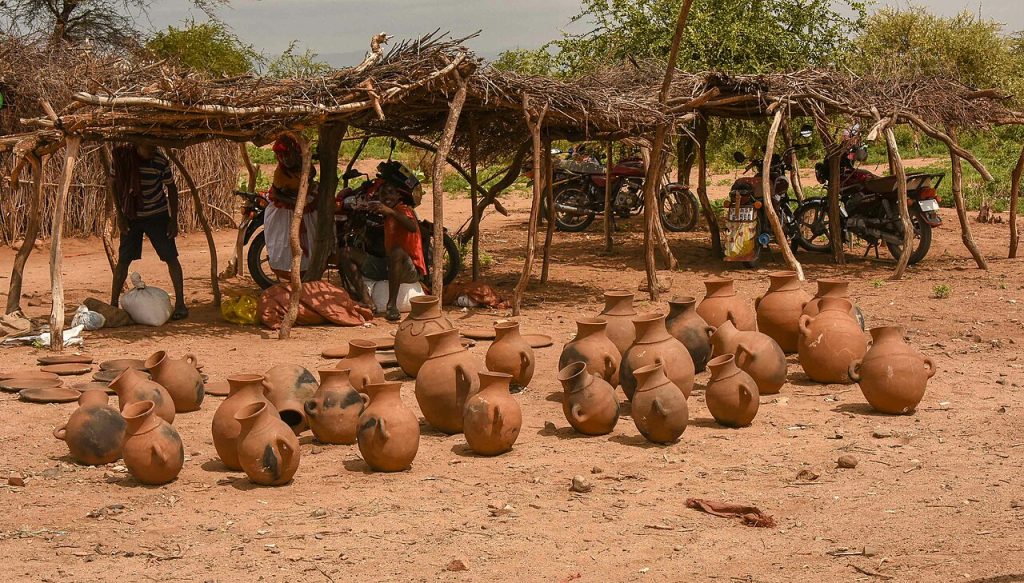
The Tsemay are a small ethnic group living in the southwestern part of Ethiopia’s Omo Valley. They share close cultural and ancestral ties with the neighbouring Banna and Arbore peoples, while the Konso are among their nearest neighbors. Traditionally, the Tsemay are agro-pastoralists, combining livestock herding with the cultivation of crops such as sorghum and maize.
Music, singing, and dance play a central role in Tsemay culture. Ritual dances performed during ceremonies and community gatherings are believed to promote unity, harmony, and protection for the tribe. These vibrant celebrations provide visitors with a fascinating insight into the community’s rich cultural heritage.
Tsemay women traditionally wear leather skirts adorned with colorful beads and often carry large calabash containers used for daily activities. Men commonly wear cotton wraps and may carry small wooden stools. Body decoration is an important aspect of Tsemay identity, with natural pigments and intricate beadwork used during festivals, ceremonies, and other special occasions.
Cattle hold significant social and economic value within Tsemay society, and a man’s wealth and status are traditionally measured by the size of his herd. Despite modern influences, the Tsemay continue to preserve many of their customs, making them one of the Omo Valley’s most culturally distinctive communities.