The Surma people, also known as the Suri, are a culturally distinctive ethnic community living in the southwestern part of Ethiopia, near the border with South Sudan. They inhabit remote areas of the Omo Valley and surrounding highlands and have historical and cultural connections with neighboring communities, including the Mursi and Me’en peoples.
The Surma traditionally practice pastoralism, with cattle playing a central role in their economy, social life, and cultural identity. They also engage in small-scale agriculture, cultivating crops to support their livelihoods. Livestock ownership is highly valued and traditionally represents wealth, social status, and security within the community.
Music, singing, and traditional dancing are important elements of Surma cultural life. Ceremonial performances are held during weddings, initiation ceremonies, festivals, and other important social occasions. These traditions help strengthen community relationships and preserve cultural knowledge passed down through generations.
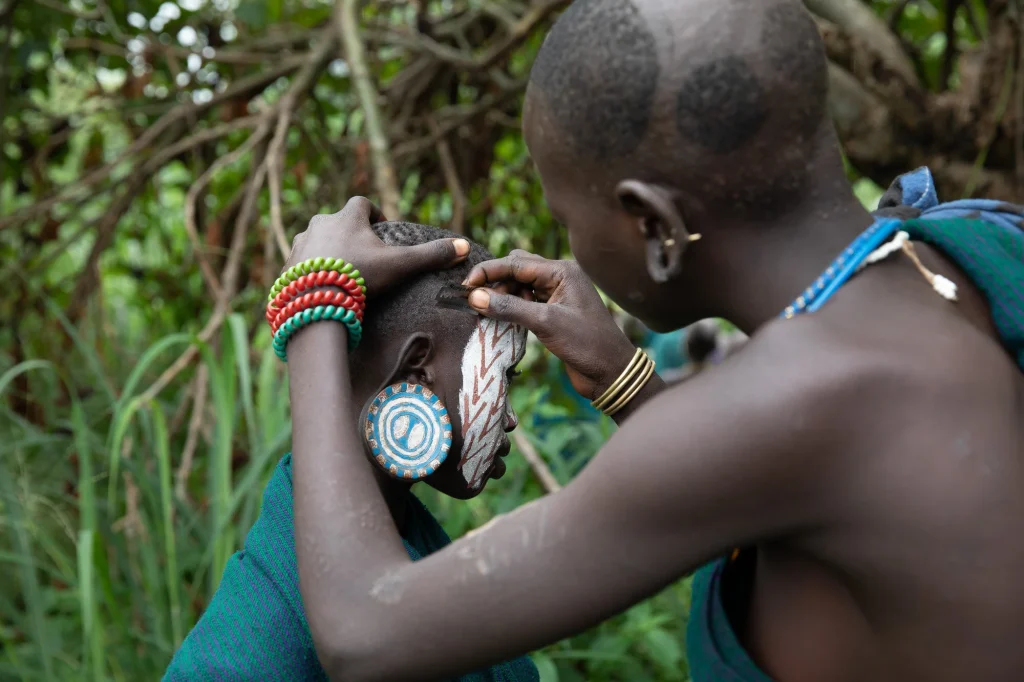
Surma women are internationally known for the traditional lip plate practice and their artistic body decoration. Some women wear clay lip plates as part of a long-standing cultural tradition, while scarification and body painting using natural pigments from clay and plants are also forms of cultural expression.
Surma men are known for the traditional stick-fighting ceremony called Donga, a highly respected cultural practice that demonstrates strength, courage, and skill. The ceremony plays an important role in social life and is connected with ideas of maturity and personal achievement.
A visit to the Surma communities offers travelers a rare opportunity to experience one of Ethiopia’s most unique cultural traditions, explore remote landscapes, and learn about the strong relationship between people, cattle, and the environment.