
Rock Hewn Churches of Tigray
Located northwest of Mekele, the capital of the Tigray Region, Gheralta is home to many of Ethiopia’s remarkable rock-hewn churches. Some of these churches are famous for their impressive stone craftsmanship, ancient paintings, and historical manuscripts, while others are admired for their breathtaking views and challenging climbs.
Approximately four hours’ drive from Axum, followed by a further two-hour steep uphill walk from the end of the road, lies the monastery of Debre Damo. Situated on a dramatic cliff-top plateau, Debre Damo is one of the most remote and fascinating historic monasteries in Tigray.
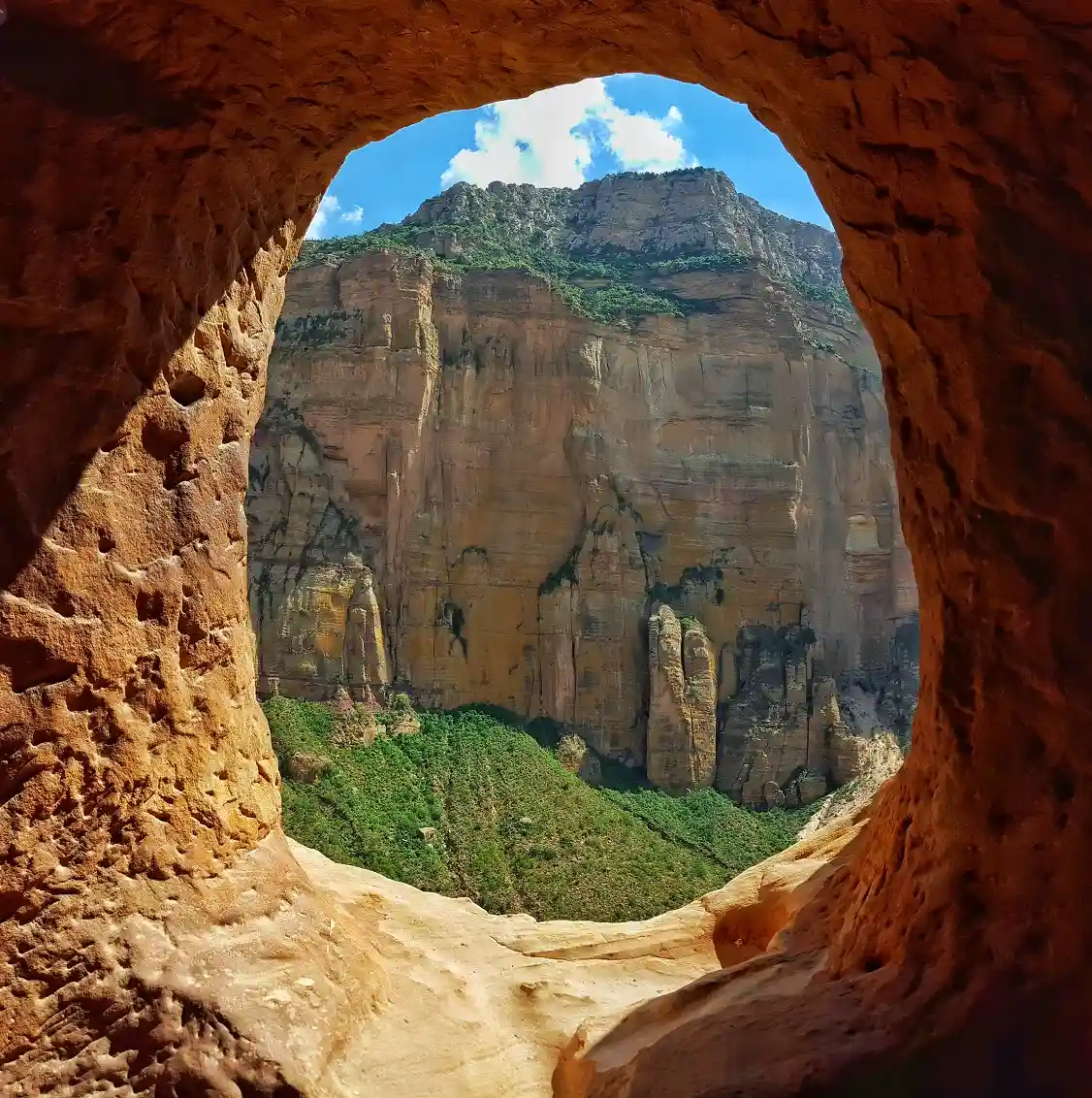
The scenery of Gheralta is spectacular. The impressive views of the majestic Mount Gheralta and the wide Hawzien Plain create a rare combination of natural beauty, history, and adventure.
Abuna Yemata Guh and Other Rock Churches of Tigray
The rock-hewn churches of Tigray are among Ethiopia’s most remarkable cultural treasures, known for their extraordinary locations, ancient artwork, and spiritual significance.
Wukro Cherkos Church
Wukro Cherkos is a semi-monolithic church whose side walls, front wall, and roof are carved separately from the surrounding rock while remaining connected to the main rock structure through its floor and rear wall.
The church is believed by some scholars to date back to the Aksumite period. Its unique interior architecture features rectangular carved columns made of quartz-rich sandstone, supporting arches and curved ceilings decorated with traditional designs. The discovery of a sandstone slab bearing inscriptions in the Aksumite style near the church has also contributed to discussions about its possible ancient origins.
Abreha We Atsbeha Church
Abreha We Atsbeha Church is located in one of the most scenic areas of the Tigray Region. Considered one of Ethiopia’s oldest churches, it is renowned for its remarkable interior decorations, ancient murals, and beautiful architectural features.
The ceilings are decorated with sophisticated patterns, while the walls display beautifully carved crosses and religious artwork. According to local tradition, the church was built in the 4th century, although some scholars suggest a later date, possibly around the 10th century.
Your text contains very valuable information about Abune Yemata Guh and Debre Damo, but it needs corrections in grammar, spelling, sentence structure, and a more professional tourism tone. I have rewritten it below.
Abune Yemata Guh Church
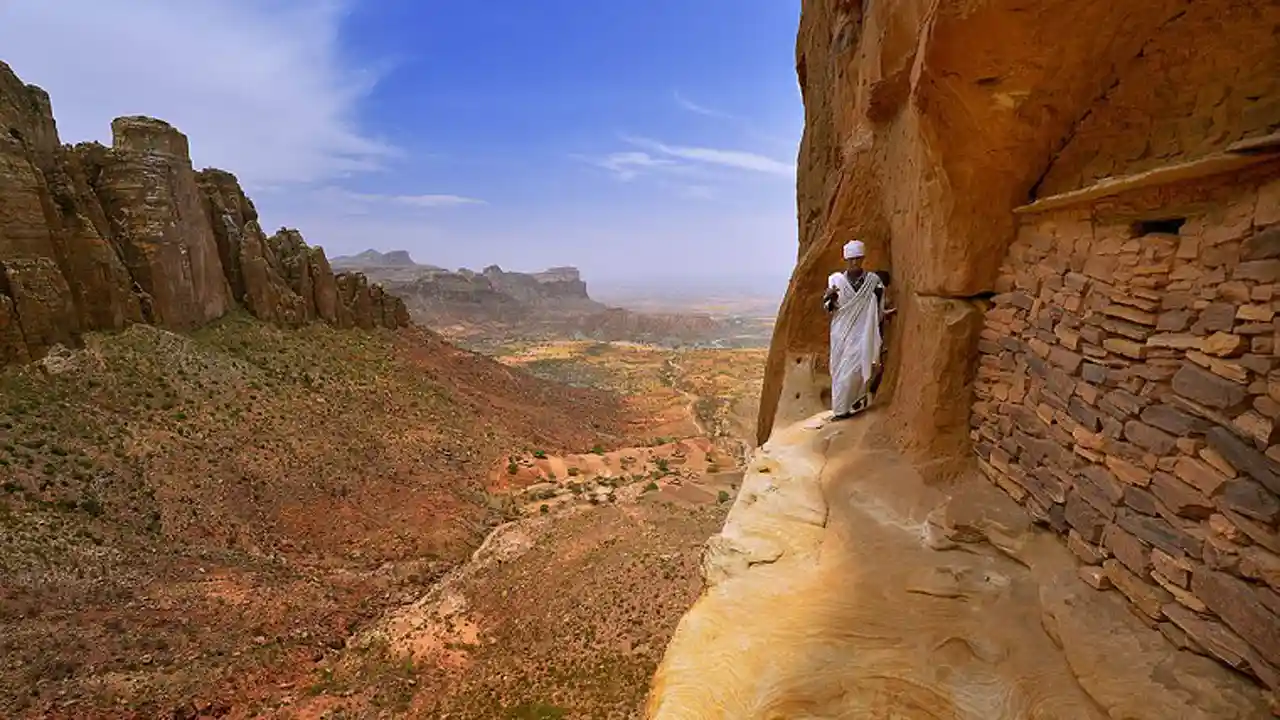
Abune Yemata Guh is one of the most spectacular and historically significant rock-hewn churches in the Gheralta Mountains. Located near the village of Megab, the church can be reached by a 5-kilometer drive west of Megab, followed by a challenging 30-minute walk to the base of the steep cliffs of Guh.
Reaching the church requires a thrilling climb up a nearly vertical rock face, including a section of approximately 5 meters where there are no permanent ladders or railings. Visitors must also cross a narrow cliffside ledge located high above the ground, making the journey an unforgettable adventure for those seeking both cultural discovery and physical challenge.
The interior of Abune Yemata Guh is famous for its beautifully preserved wall and ceiling frescoes depicting stories from the Old and New Testaments. These remarkable paintings are believed to date back to the 15th century and represent some of Ethiopia’s finest examples of religious artwork. The annual celebration of the church takes place on 8 November.
Debre Damo Monastery
Located approximately 76 kilometers from Axum, Debre Damo is one of Ethiopia’s most ancient and important monasteries. The monastery is traditionally believed to contain one of the oldest surviving intact churches in Ethiopia.
According to local tradition, Abune Aregawi, one of the Nine Saints who came to Ethiopia in the 6th century, founded the monastery. Due to its remote location on a flat-topped mountain plateau, Debre Damo can only be reached by climbing a traditional leather rope, a challenging ascent that has helped preserve the monastery’s treasures for centuries.
Hidden within the monastery are valuable collections of ancient manuscripts, religious texts, and historical documents. The monastery is believed to have preserved some of the oldest surviving Ethiopian manuscripts, although many historical collections have been lost over time. Today, Debre Damo remains an important center of Ethiopian Orthodox Christian heritage and scholarship.
Note: Due to traditional regulations, access to Debre Damo Monastery is restricted to men.