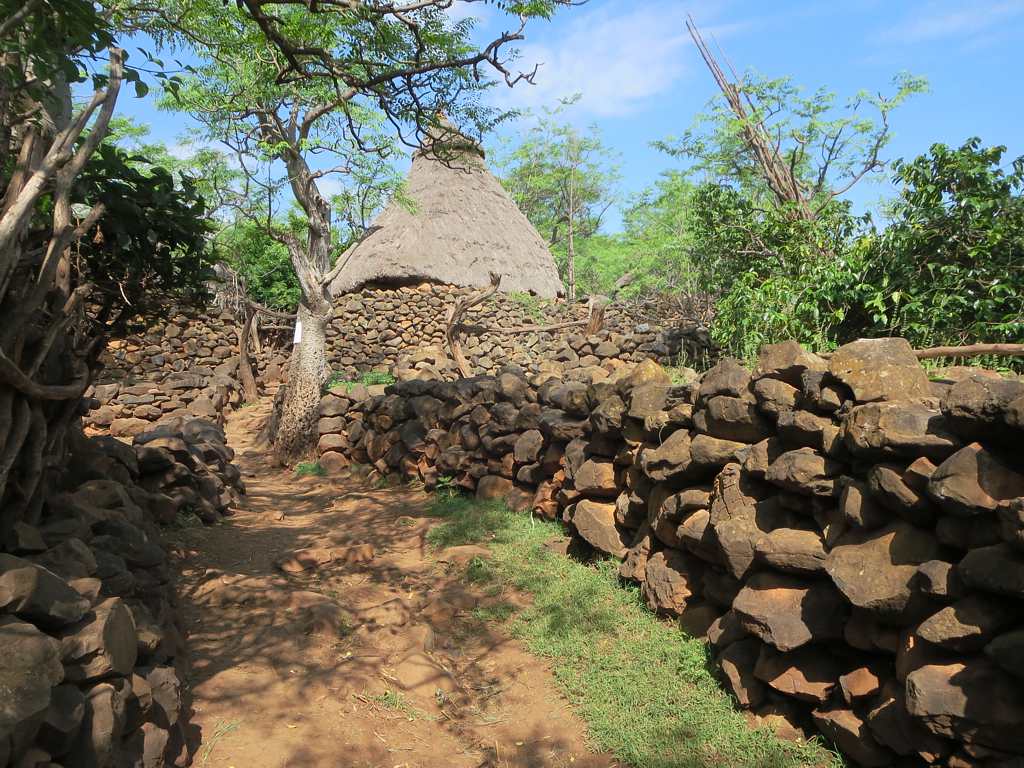
The Konso people live in an isolated and beautiful region of southern Ethiopia, characterized by dramatic basalt hills, rocky landscapes, and carefully cultivated terraces. Their homeland, located near the lower Omo Valley, is known for its unique landscape, traditional villages, and remarkable cultural heritage.
Konso villages are traditionally built on hilltops and are often surrounded by stone walls that served as protection and security in the past. To enter a traditional Konso village, visitors pass through gates and narrow pathways that form part of the village’s defensive design. Inside the villages, communities are organized around central gathering areas and traditional communal huts where social activities and ceremonies take place.
The Konso are well known for their strong agricultural traditions, especially their impressive stone terraces, which have allowed them to cultivate crops in a challenging mountainous environment for generations. Their farming knowledge and land management practices demonstrate a deep connection between the people and their environment.
Although the Konso maintain many traditions that have been preserved for hundreds of years, modern influences have also become part of daily life. Younger generations may wear contemporary clothing while continuing to respect and practice important cultural traditions.
The Konso are one of the most fascinating communities to visit in the lower Omo Valley. Their unique villages, traditional knowledge, beautiful landscapes, and strong cultural identity offer travelers a meaningful opportunity to experience one of Ethiopia’s most remarkable living cultures.