
The Hamar people are one of the most well-known ethnic communities of southwestern Ethiopia. They live mainly in Hamer Bena Woreda (district) in the South Omo Zone of the Southern Nations, Nationalities, and Peoples’ Region (SNNPR), an area known for its rich cultural diversity and traditional way of life.
The Hamar are primarily pastoralists, and cattle play a central role in their economy, social relationships, and cultural identity. Many Hamar communities practice a semi-pastoral lifestyle, moving with their cattle and goats in search of suitable grazing areas while maintaining strong connections to their traditional lands.
Traditional Hamar villages are built around a central meeting area and usually consist of round, cone-shaped huts made from wooden branches covered with grass, mats, and animal hides. A typical village includes family homes, a cattle and goat enclosure, and open spaces where community gatherings, dancing, and celebrations take place.
Because livestock are central to their lifestyle, cattle and goats provide milk, meat, and important social value. The Hamer also trade with neighboring communities for agricultural products such as sorghum and maize, which are important parts of their diet. Sorghum is commonly prepared as a type of pancake or porridge and served with traditional stews.
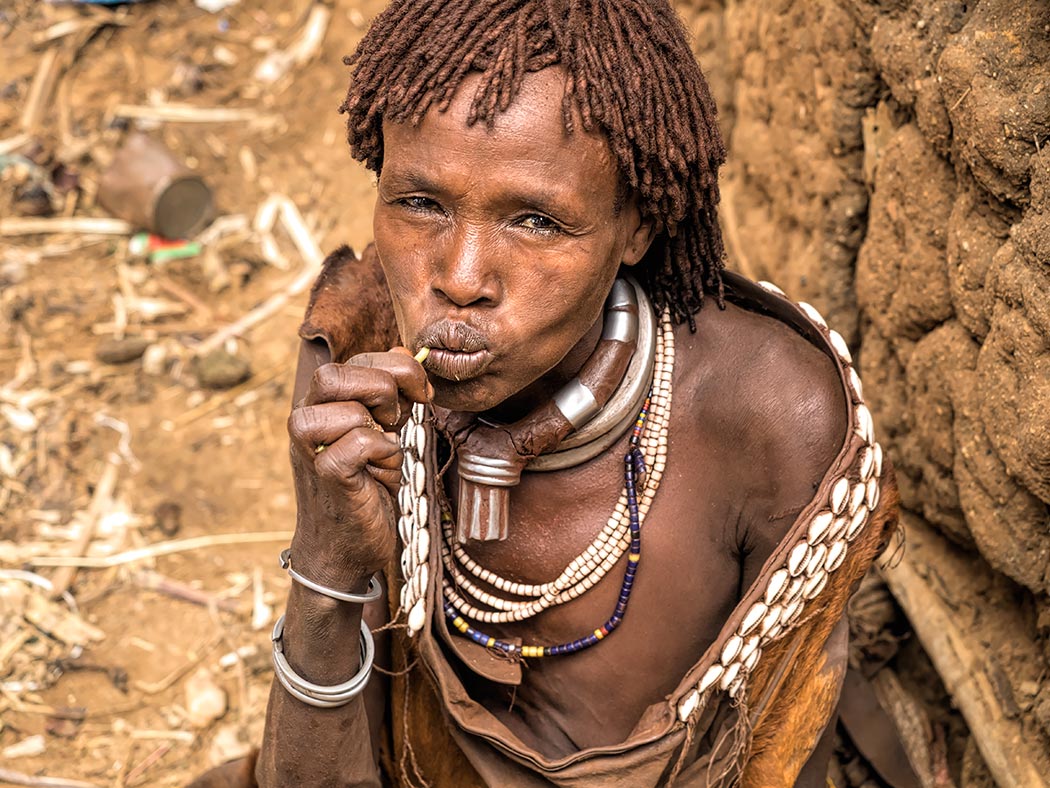
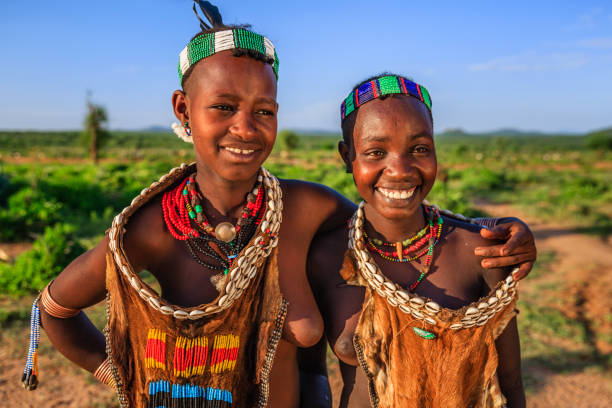
Traditional clothing is an important part of Hamar identity. Men often wear decorated cloth garments, while women are known for their distinctive leather skirts, jewelry, hairstyles, and body decorations that reflect their cultural traditions.
The Hamer Bull Jumping Ceremony
The Bull Jumping Ceremony is one of the most important traditions of the Hamer people. It is a traditional rite of passage that marks the transition of a young man into adulthood and is an important step before marriage.
During the ceremony, the young man must successfully run across the backs of a line of cattle several times as a demonstration of courage, strength, and readiness for adult responsibilities. The event is accompanied by singing, dancing, and celebrations involving family and community members.
After completing the ceremony, the young man becomes a member of the Maza, a group of men who have recently completed the same rite of passage and help organize and support similar ceremonies within Hamer communities.
For visitors, attending a Hamer Bull Jumping Ceremony offers a rare opportunity to witness an important cultural tradition and gain a deeper understanding of the social values, history, and identity of the Hamer people.