
Fasika, the Ethiopian Orthodox celebration of Easter, is one of the most important religious festivals in Ethiopia. It comes after a 55-day period of strict fasting known as Hudade or Abye Tsome, during which Orthodox Tewahedo Christians abstain from eating meat, dairy products, and other animal-based foods.
During the fasting period, people eat mainly vegetarian meals, including lentils, split peas, grains, fruits, and different types of vegetable stews served with injera and traditional bread. On most fasting days, the first meal is eaten after 3:00 PM (9:00 in the afternoon according to Ethiopian time). On Saturdays and Sundays, however, worshippers may eat earlier after attending the morning church service.

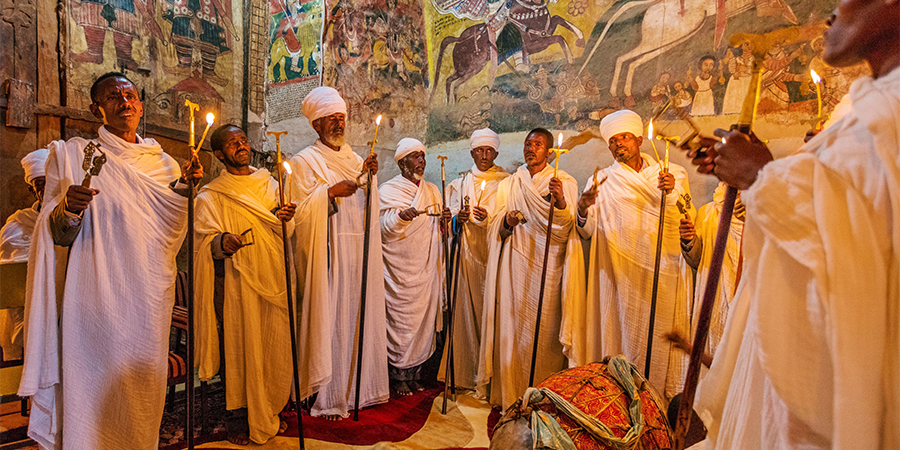
On Easter Eve, worshippers gather in churches for a special overnight celebration. The service begins in the evening with prayers, hymns, and candlelight ceremonies and continues until the early hours of the morning. The atmosphere is filled with devotion, traditional chants, and colorful religious celebrations.
After the Easter service, families return home to break the long fast with a special feast. Traditionally, chicken, lamb, or other meat dishes are prepared and served with injera, along with traditional drinks such as tella and tej. Easter is also a time for family gatherings, sharing blessings, exchanging gifts, and strengthening community relationships.
Like other major Ethiopian festivals, Fasika is celebrated with great devotion and cultural richness throughout the country. Historic cities such as Axum and Lalibela provide especially memorable experiences, where ancient churches and centuries-old traditions create a unique spiritual atmosphere.