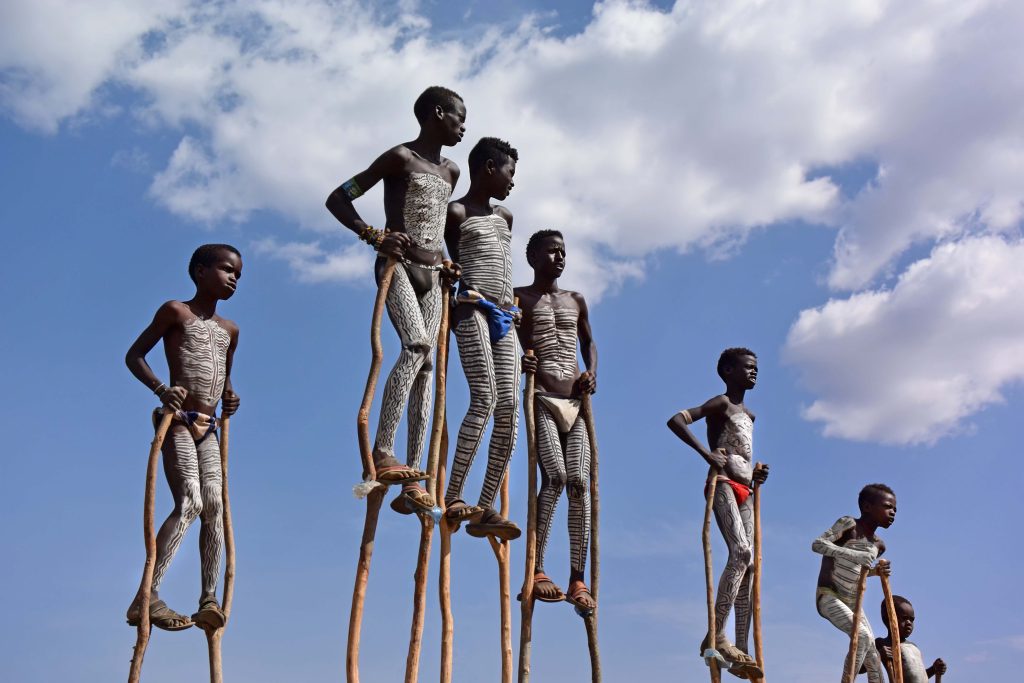
The Banna people are a small but culturally rich ethnic community living in the southwestern part of Ethiopia’s Omo Valley. They have historical and cultural connections with neighboring communities, including the Hamer and Bashada peoples, and are known for their traditional ceremonies, music, dance, and distinctive cultural expressions.
The Banna practice agro-pastoralism, combining crop cultivation with livestock keeping. Cattle and other animals play an important role in their economy, social relationships, and cultural identity. Traditionally, livestock ownership is closely connected with wealth, status, and social importance within the community.
Singing and traditional dancing are central parts of Banna culture. Community members perform dances during ceremonies and celebrations, which are believed to strengthen social unity, bring harmony, and maintain cultural traditions passed down through generations.
Banna women are known for their colorful beadwork, bracelets, and traditional leather clothing, while men may decorate their hair with clay ornaments and use body decoration as a symbol of identity and social status. Natural pigments made from soil and minerals are used for body painting during important cultural occasions.
A visit to the Banna communities provides travelers with an opportunity to experience the traditions, hospitality, and daily life of one of the Omo Valley’s lesser-known but fascinating cultural groups.