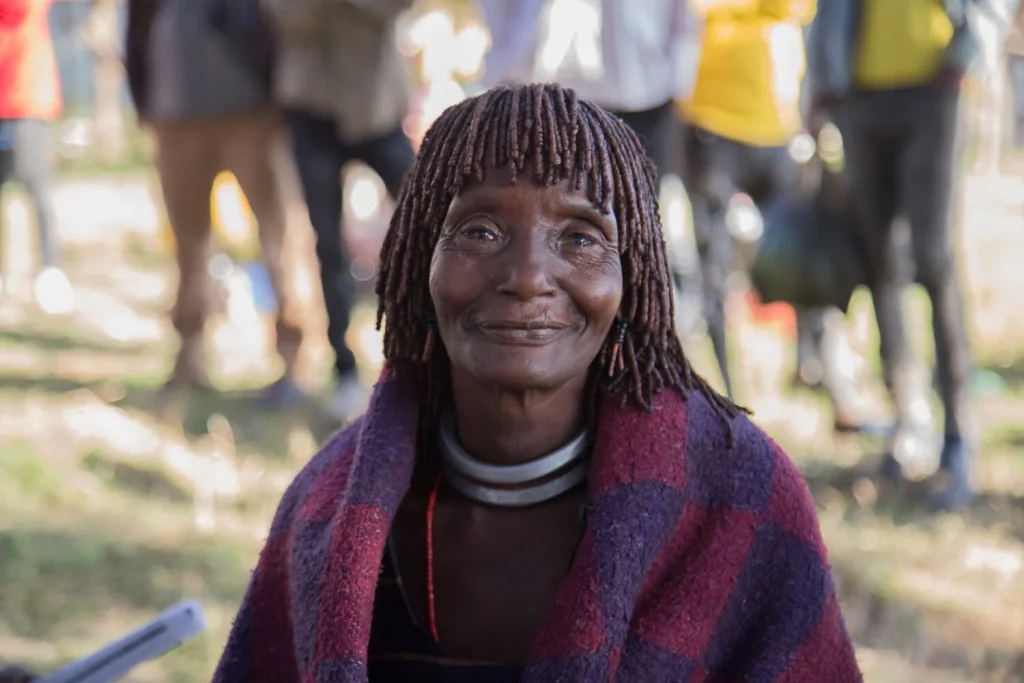
The Ari people are one of the largest ethnic communities in the Omo Valley, living mainly in the highlands surrounding Jinka in southwestern Ethiopia. They belong to the Omotic language family and are known for their agricultural traditions, craftsmanship, and rich cultural heritage.
Unlike many pastoral communities of the Omo Valley, the Ari are primarily agriculturalists. They cultivate a variety of crops, including coffee, maize, bananas, and other food crops, while also keeping livestock. Their fertile highland environment allows them to practice diverse farming activities that support their traditional way of life.
Music, singing, and traditional dancing play an important role in Ari cultural celebrations and ceremonies. These performances are believed to strengthen community relationships, celebrate important occasions, and express cultural identity.
Ari women are well known for their colorful clothing, traditional jewelry made from beads and metal, and their skills in pottery, weaving, and other handicrafts. These artistic traditions are an important part of daily life and provide valuable sources of income for many families.
Ari men are often involved in farming, livestock keeping, and traditional crafts. Agricultural tools and farming knowledge remain essential parts of their daily activities. Body decoration using natural materials may also be practiced during festivals and cultural events.
The Ari people offer visitors a different perspective on the diversity of the Omo Valley. A visit to Ari communities provides an opportunity to experience traditional farming, local crafts, hospitality, and the everyday life of one of Ethiopia’s culturally rich communities.