
Abune Yosef (Amharic: አቡና ዮሴፍ) is one of the most spectacular mountains in the Lasta Massif of the Ethiopian Highlands. Rising to an elevation of 4,284 meters, it is one of the highest peaks in Ethiopia and is located in the Semien Wollo Zone of the Amhara Region.
This breathtaking mountain landscape is a highly important and fragile ecosystem, featuring a remarkable combination of woodland, montane dry forests, afro-alpine grasslands, and evergreen vegetation. The diverse habitats create a unique highland environment that supports a wide variety of wildlife and plant species.
Abune Yosef is home to at least 43 mammal species and more than 220 bird species, including several threatened species. Its dramatic scenery, rare wildlife, and untouched landscapes make it one of Ethiopia’s most rewarding destinations for trekking and nature exploration.

Wildlife of Abune Yosef
One of the greatest highlights of Abune Yosef is the opportunity to see the Ethiopian Wolf, one of the rarest and most endangered carnivores in the world. Only a few places in Ethiopia, including the Simien and Bale Mountains, provide a chance to observe this remarkable species.
The mountain is also home to large groups of Gelada Baboons, the only grass-eating primates in the world. Other wildlife found in the area includes leopards, grivet monkeys, golden jackals, Ethiopian genets, African civets, mongooses, hyenas, African wildcats, caracals, aardvarks, bush pigs, bush duikers, klipspringers, squirrels, and various species of bats.
Beyond mammals, Abune Yosef is also an important destination for bird lovers, with a high diversity of bird species, including many endemic birds found only in Ethiopia.
Flora and Highland Ecosystem
The vegetation of Abune Yosef changes dramatically with altitude, ranging from warmer highland zones at lower elevations to afro-alpine environments above 3,500 meters.
The mountain supports a variety of plant species, including ancient juniper trees, African wild olive, eucalyptus, Hagenia abyssinica, Euclea schimperi, Erica species, Hypericum revolutum, Alchemilla, Potentilla, Helichrysum, Senecio, Carex, Poa, Festuca, Agrostis, and giant lobelias.
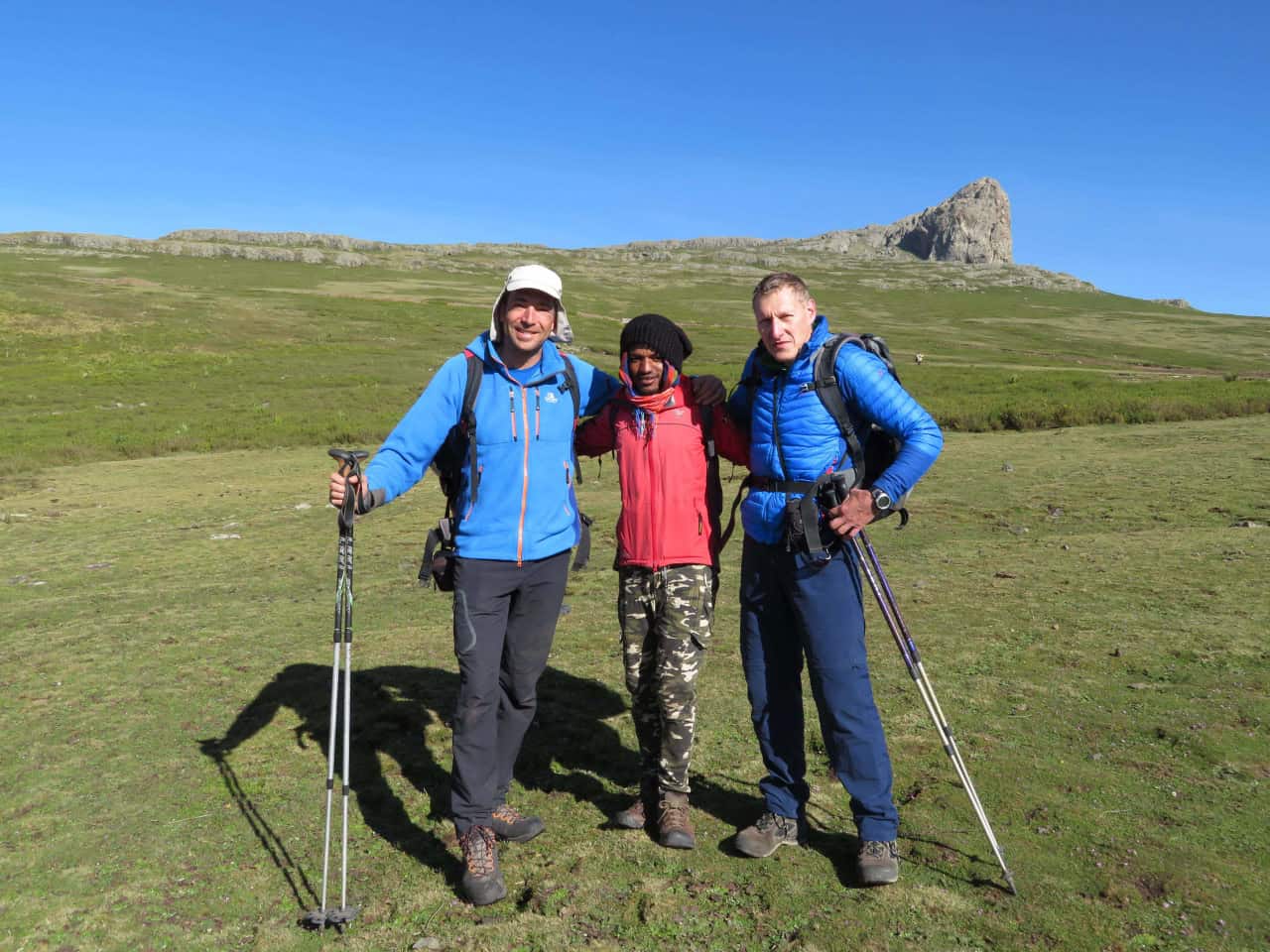
Trekking Abune Yosef
Abune Yosef is home to several impressive peaks, including Rim Gedel (4,284 meters), one of Ethiopia’s highest mountains above 4,000 meters. Other notable peaks include Big Zigit (4,080 meters) and Small Zigit (4,025 meters).
On the northwestern slopes of the massif, at an altitude of approximately 3,300–3,600 meters, lies the traditional village of Tigu Kebele. The local communities are mainly farmers who cultivate crops such as barley, onions, potatoes, and lentils while maintaining a close connection with their highland environment.
A trek to Abune Yosef offers travelers an unforgettable combination of mountain scenery, rare wildlife, traditional villages, and authentic Ethiopian highland culture. The main hiking route usually takes around 8 hours and rewards visitors with spectacular views and a unique wilderness experience.