
13-Day Omo Valley Cultural & Photography Expedition
Tour Code: EDT-03- H13C
Embark on an extraordinary journey through Ethiopia’s remote and wildly fascinating tribal lands, capturing rare cultural moments and breathtaking landscapes.

13-Day Omo Valley Cultural & Photography Expedition
13
Days
Overview
Embark on an extraordinary 13-day photography expedition through Ethiopia’s remote and fascinating tribal lands. Journey deep into the Omo Valley to capture rare cultural moments, stunning landscapes, and authentic encounters with indigenous communities whose traditions and artistry have been preserved for generations.
Experience the unique cultures of the Suri, Karo, Hamer, Mursi, and other Omo Valley communities, known for their traditional ceremonies, body painting, unique adornments, and vibrant ways of life.
Duration: 13 Days and 12 Nights
Transportation: Car & Domestic Flight
Highlights: Indigenous cultures, people, wildlife, nature, landscapes, photography opportunities, and unforgettable cultural experiences.
Itinerary
Start your day early with a transfer to the airport for your flight to Jimma. Upon arrival, you will be warmly welcomed by your Extraordinary Ethiopia Tours driver and begin your journey into southwestern Ethiopia.
Jimma, the largest city in the region, was once the capital of the former Kaffa Province and is located in the heart of Ethiopia’s famous coffee-growing area. Known as the birthplace of coffee, the region is home to vast coffee forests, plantations, and rich agricultural traditions.
After lunch, continue your scenic drive to Mizan Teferi. Travel through the lush landscapes of western and southwestern Ethiopia, a region known for its diverse forests, fertile farmland, coffee plantations, tea fields, and spice-growing areas. Enjoy spectacular views and numerous photography opportunities as you pass through rural villages and beautiful natural surroundings.
Accommodation: The Grand Hotel and Spa, Mizan Teferi
Meals: Breakfast, Lunch, and Dinner
Today marks the beginning of your first photography session as you travel deep into the remote southwestern region of Ethiopia. Along the way, pass through the famous Bebeka Coffee Plantation, located about 30 km from Mizan Teferi and one of Ethiopia’s oldest and largest coffee plantations.
Continue through the town of Tulgit before arriving in Kibish, the gateway to the remote homeland of the Suri people. Today’s focus will be capturing the unique culture and daily life of one of the Omo Valley’s least-visited and most culturally preserved communities.
The Suri are traditionally pastoralists with a deep connection to their cattle, which play an important role in their social and cultural identity. They are renowned for their extraordinary body decoration, including colorful body painting, scarification, and creative adornments made from natural materials such as flowers, leaves, and clay. Suri women are also known for wearing distinctive lip plates, similar to the Mursi tradition.
Spend time photographing authentic moments, traditional lifestyles, and the remarkable artistic expressions of the Suri people in their natural environment.
Accommodation: Camping, Kibish
Meals: Breakfast, Lunch, and Dinner
After breakfast, continue exploring the fascinating culture of the Suri people. One of the most remarkable aspects of Suri tradition is the Donga stick fighting ceremony, a traditional sport and important rite of passage for young men.
If your visit coincides with a Donga competition, you may have the rare opportunity to witness this powerful cultural event. Participants, usually unmarried men, compete using long hardwood poles known as Donga, demonstrating strength, courage, and skill in front of the community.
Beyond competition, taking part in Donga is considered a significant achievement and an important step in a young man’s social life. The ceremony reflects the values of bravery, respect, and cultural identity within the Suri community.
Continue photographing the daily life, traditions, and unique cultural expressions of the Suri people before returning to your campsite.
Accommodation: Camping, Kibish
Meals: Breakfast, Lunch, and Dinner
After an early breakfast, prepare your camera equipment for a full day of photography with the Suri people. Explore local villages and surrounding areas, capturing authentic moments of daily life, traditional activities, and interactions around streams and natural landscapes.
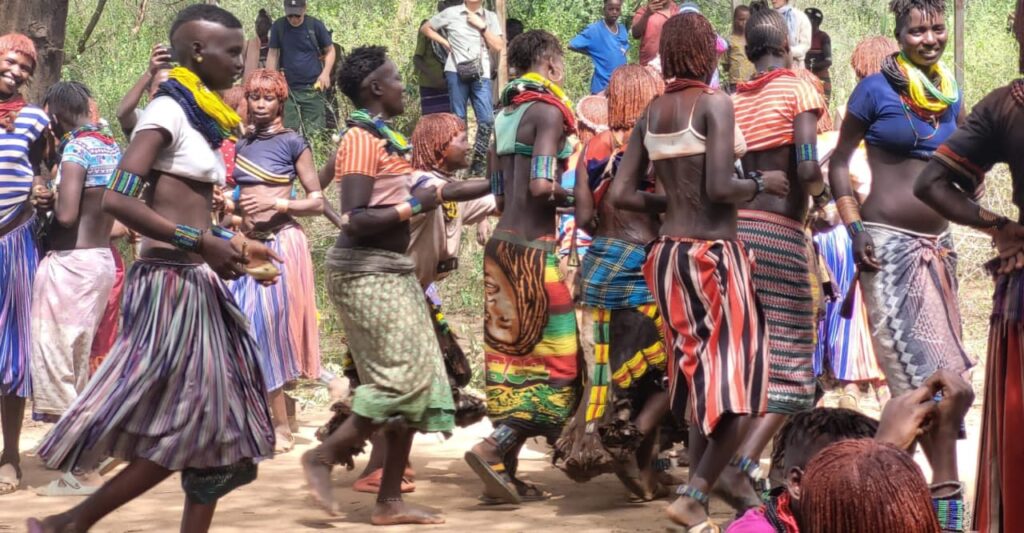
In the late afternoon, enjoy a special photography opportunity as you witness a traditional Suri dance at sunset. This vibrant cultural experience offers incredible moments to capture the community’s music, movement, traditional attire, and unique expressions.
Accommodation: Camping, Kibish
Meals: Breakfast, Lunch, and Dinner
Depart early at 5:00 AM and leave behind the Suri community as you begin a long but scenic journey toward Turmi, your base for the next four nights. Travel through the beautiful landscapes of Omo National Park, where you may have opportunities to spot wildlife along the way and enjoy photography stops in the natural surroundings.
Turmi is located in the Debub Omo Zone of southwestern Ethiopia and serves as an ideal base for exploring the lower Omo Valley and visiting the Hamer people. The area is renowned for its rich cultural traditions, including the famous Bull Jumping ceremony, traditional celebrations, and the colorful Monday market where local communities gather to trade and socialize.
Upon arrival in Turmi, settle into your lodge and prepare for the upcoming days of cultural exploration and photography opportunities.
Accommodation: Paradise Lodge, Turmi
Meals: Breakfast, Lunch, and Dinner
After an early breakfast, prepare your camera gear for a full day of photography as you explore the fascinating cultures of the lower Omo Valley.
Drive to Kangaten, crossing the newly built bridge over the Omo River. Here, you will visit the Nyangatom people, a community believed to have ancestral connections with the Toposa of South Sudan and cultural links with communities in Kenya and Uganda.
Living in one of the region’s most challenging environments, the Nyangatom have developed a strong connection with the Omo River, which serves as an essential source of water and life. The women are known for their beautiful multi-layered bead necklaces, which are added over time and represent identity, age, and social status. Capture authentic moments of daily life, traditional dress, and the relationship between the community and their environment.
Continue to the Karo village of Dus, located along the banks of the Omo River. The Karo people are famous for their artistic body painting, intricate decorations, and unique cultural expressions. Women may wear traditional lip ornaments, while both men and women decorate their bodies with natural pigments and creative designs.
If you are fortunate, you may witness a traditional communal dance beside the Omo River — a dramatic and atmospheric scene filled with movement, dust, music, and unforgettable photography opportunities.
Return to Turmi in the evening.
Accommodation: Paradise Lodge, Turmi
Meals: Breakfast, Lunch, and Dinner
After breakfast, begin your photography session at the vibrant Hamer open-air market in Turmi. This lively gathering offers an excellent opportunity to capture authentic moments of daily life, traditional trade, and the colorful cultural expressions of the Hamer people.
The Hamer women are renowned for their distinctive appearance, including heavy copper necklaces that indicate marital status, beautifully decorated beaded skirts, and their iconic hairstyles made with a mixture of red ochre and butter. Hamer men are also recognized for their unique hairstyles, often shaped with colored clay caps known as Poro.
Spend time photographing the atmosphere of the market, traditional clothing, local interactions, and the rich cultural details that make the Hamer community one of the most fascinating groups in the Omo Valley.
Accommodation: Paradise Lodge, Turmi
Meals: Breakfast, Lunch, and Dinner
Today is fully dedicated to experiencing and photographing the traditional village life of the Hamer people. Visit a Hamer village homestead and gain insight into their unique way of life, including the beautifully crafted goat-skin dresses, elaborate hairstyles, traditional ceremonies, and daily activities of the community.
Learn about Hamer customs, language, social traditions, and the important roles of family members within the village. This intimate cultural encounter offers exceptional opportunities to capture authentic portraits and everyday moments.
In the late afternoon, witness the dramatic Bull Jumping Ceremony, an important rite of passage for young men of the Hamer and Karo communities. This powerful cultural event symbolizes maturity, courage, and the transition into adulthood, providing a memorable photography experience.
Accommodation: Paradise Lodge, Turmi
Meals: Breakfast, Lunch, and Dinner
After breakfast, travel to Arbore, located near the foothills of Mount Buska and the shores of Lake Chew Bahir. Spend time photographing the Arbore people, a semi-nomadic pastoralist community known for their strong cultural identity, colorful beadwork, and distinctive traditional appearance.
Arbore women are recognized for their striking features, traditional head coverings, and unique hairstyles, with some women shaving their heads before marriage as part of cultural tradition. Enjoy an extended photography session capturing authentic portraits, daily activities, traditional clothing, and village life.
Learn about the Arbore way of life, their pastoral traditions, farming practices, social structures, and ancestral connections with neighboring communities, including the Konso people. Their rich traditions, music, rituals, and craftsmanship reflect the diversity of cultures found in the Omo Valley.
Return to Turmi in the afternoon.
Accommodation: Paradise Lodge, Turmi
Meals: Breakfast, Lunch, and Dinner
Wake up early before dawn and drive to Omorate, located near the Kenyan border, to visit the Dassanech people. This remote community lives along the Omo River and has adapted to one of the harshest environments in the region. If you are fortunate, you may have the opportunity to witness a traditional Dimi ceremony, a special celebration connected to female fertility and social status.
Enjoy a photography session with the Dassanech people, capturing their unique traditions, daily activities, traditional clothing, and riverside way of life. After the visit, return to Turmi for breakfast before continuing your journey toward Jinka.
En route, stop at Key Afer’s colorful open-air market, one of the most vibrant markets in the Omo Valley. Here, you will meet members of the Bana, Ari, and Tsemay communities, along with traders from Jinka and surrounding villages. The market offers excellent opportunities for photography, capturing local commerce, traditional attire, and cultural interactions.
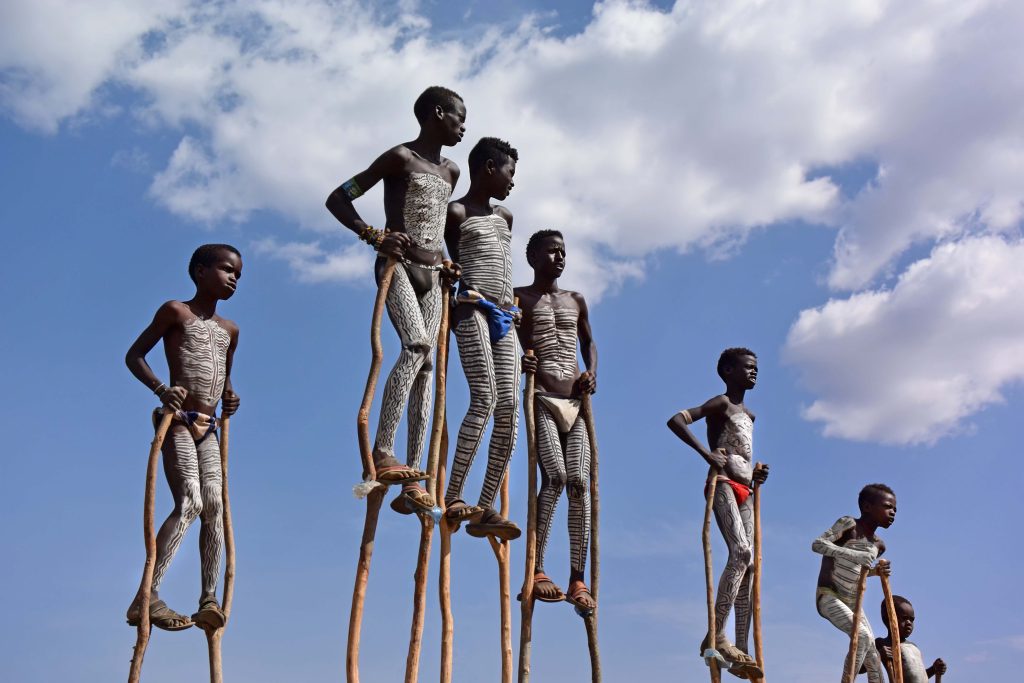
After lunch, continue your journey and enjoy a unique photo opportunity with the playful Bana stilt-walking boys before arriving in Jinka.
Accommodation: Nasa Hotel, Jinka
Meals: Breakfast, Lunch, and Dinner
After breakfast, drive to Mago National Park to visit the Mursi people, one of the most distinctive and culturally fascinating communities of the Omo Valley.
The Mursi live in traditional huts made from local natural materials and maintain a strong connection with their pastoral lifestyle. They are widely known for their unique cultural traditions, including body painting, scarification, and the famous lip plates worn by some women as a symbol of identity and cultural heritage. Mursi men are also recognized for their traditional hairstyles and body decorations.
Spend time photographing the Mursi people, their traditional way of life, and the remarkable artistic expressions that make their culture unique. Learn about their customs, social structures, and deep connection with the surrounding environment.
After the visit, return to Jinka in the afternoon.
Accommodation: Nasa Hotel, Jinka
Meals: Breakfast, Lunch, and Dinner
Today, explore the fascinating culture and traditional lifestyle of the Bodi people, one of the indigenous communities of southwestern Ethiopia.
The Bodi are renowned for their deep connection with cattle, which play a central role in their social and cultural life. Livestock are highly valued and are closely linked to important traditions, including marriage ceremonies, naming practices, and spiritual rituals.
As both pastoralists and farmers, the Bodi depend on their cattle herds as well as agriculture, cultivating crops such as sorghum, maize, and coffee along the fertile banks of the Omo River. Spend time photographing their daily activities, traditional practices, and the strong relationship between the community and their environment.
Accommodation: Nasa Hotel, Jinka
Meals: Breakfast, Lunch, and Dinner
After breakfast, visit the Ari village, located in the highlands around Jinka. The Ari people are one of the largest ethnic groups in the Omo Valley, known for their traditional farming practices, pottery, weaving, and rich cultural traditions. Enjoy a photography session capturing their daily life, local crafts, and unique way of living.
Return to the hotel for checkout and transfer to Jinka Airport for your flight back to Addis Ababa, Ethiopia’s diplomatic capital.
Upon arrival in Addis Ababa, visit the National Museum of Ethiopia, home to remarkable historical collections and the famous 3.2-million-year-old fossil remains of Lucy, one of humanity’s earliest ancestors. Continue to the Ethnological Museum, located in the former palace of Emperor Haile Selassie, where you will discover Ethiopia’s diverse cultures, traditions, and history within beautiful gardens and surroundings.
In the evening, enjoy a memorable farewell dinner at Yod Abyssinia Cultural Restaurant, featuring traditional Ethiopian cuisine, local drinks, music, and cultural performances. After the farewell celebration, transfer to Bole International Airport for your international departure.
Entrance fees for all sites and villages mentioned in the itinerary. |
All excursions listed in the itineraries. |
Experienced, English Speaking tour guide and local guide’s expenses. |
Ground transportation via tour vehicle. (Includes driver, fuel and driver allowance |
All meals for the duration of the tour. |
Lodging as noted on itinerary for 12 nights. |
Discount Domestic airfares; unless extra USD 150$ per person if you have no international flight with ET or Ethiopia passport. |
All hotel/airport transfers listed on the itinerary |
Scout fee in Mago National Park and Danakil Depression |
Farewell dinner |
Photo and videography fee |
Any costs of a personal nature. |
Alcoholic drinks. |
International Airfare. |
Tips for service provider |
Visa costs. |
And what is NOT include on the “Include” list |
ET231 ADD- JIM
DEPART 08:25AM –ARRIVAL09:30AM
DURATION 1H 5M- NON STOP
ET270 BCO-ADD
DEPART 10:15AM –ARRIVAL11:40AM
DURATION 1 H 25M- NON STOP
ADD- Addis Ababa
JIM- Jimma
BCO -Jinka
Mizan Tefere- The grand hotel and Spa
Jinka- NASA Hotel
Turmi- Buska Lodge
Suri (Surma)- Camping
Turmi- Paradise Lodge
Book Your Ethiopian Adventure Today
R
Ready for your next adventure?
Fill out the form below to book your tour. Whether you are looking for a cultural journey, wildlife safari, or nature escape, our team will contact you shortly to confirm availability, pricing, and all the details needed to create your unforgettable Ethiopian experience.
* Trip code: EDT-03- H13C



- Best Price Guaranteed
- No Booking Fees
- Professional Local Guide
Transportation Type
Domestic Flights + Private Vehicle
Accommodation
4-Star Hotels and Eco-Lodges
Departure from
Addis Ababa
Maximum Altitude
~2,600 meters
Best Season
October – March
Tour Type
Cultural, Tribal, History, Adventure
Meals
Breakfast, Lunch, Dinner included
Language
English (other languages on request)
Fitness Level
Moderate
Minimum Age
5
Maximum Age
70
Lorem ipsum dolor sit amet, consectetur adipiscing elit. Ut elit tellus, luctus nec ullamcorper mattis, pulvinar dapibus leo.