
GHERALTA – northwest of Mekelle, the capital of Tigray, is the home of a quarter of the rock churches, some famous for their stone workmanship, ancient paintings and old manuscripts, and others known for their magnificent view and difficult ascent. Some four hours drive from Axum-plus a further two hours, stiffuphill walk from the road ends — lies the monastery of Debre Damo, situated on a cliff top in one of the wildest part of Tigray.
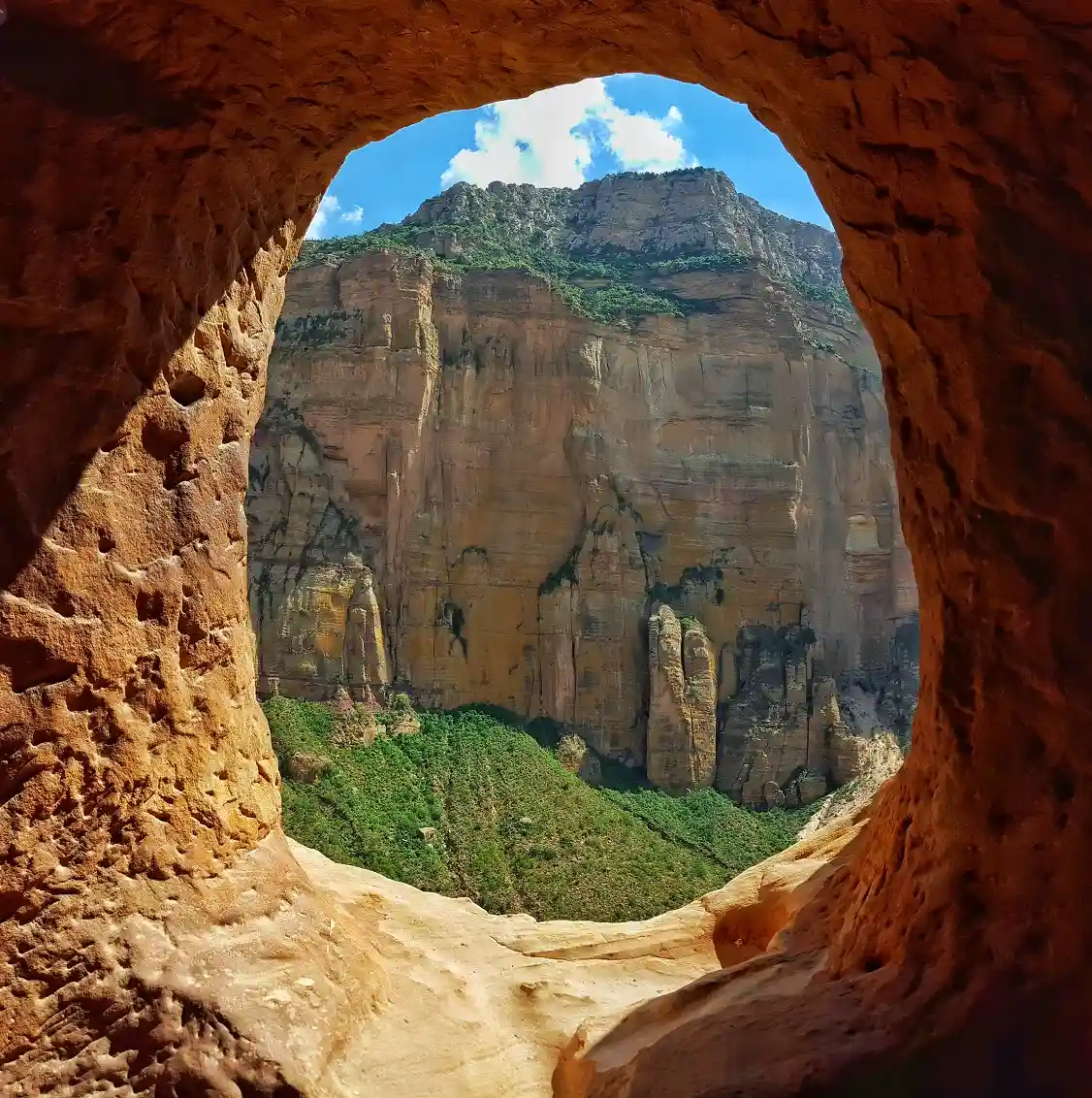
The scenery of Gheralta is spectacular. The view of the graceful mount Gheralta and the far-reaching Hawzien plain is a rare combination of extraordinary beauty.
WUKRO CHERKOS CHURCH – is a semi-monolithic church whose side walls, front wall and roof are completely separated and projecting from the main rock. It is attached to the rock only on its floor and at its back wall. The church is believed to have been carved during the 4th c. internal architecture and art works, rectangular carved columns of quartz-rich sandstone supporting arches and curved ceilings decorated by similar designs characterize this church. The presence of a sand stone slab with inscriptions of the Aksumite type in the vicinity of the church may also support the claim that the church dates back to Aksumite Period.
ABRHA WE ATSBEHA – is located in one of the most scenic sites of the Tigrian Region. Considered among the country’s earliest churches, it is known for its extraordinary interior decoration as well as its magnificent murals. Its ceiling is decorated with sophisticated patterns and its walls are dotted by curved crosses. According to local tradition, the church was constructed in the 4th c, but some scholars estimate its date of construction to be the 10th c.
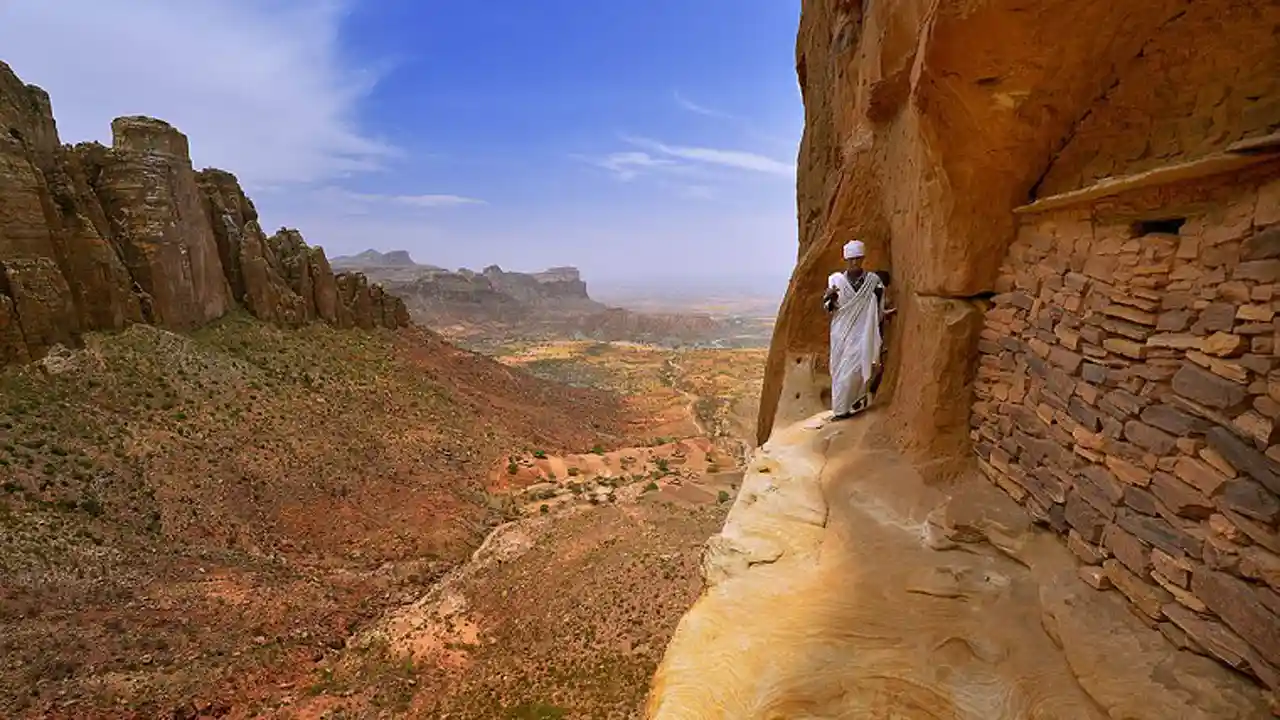
ABUNE YEMATA (GUH) – Yemata is one of the most majestic and historical churches in Gheralta a village called Megab. It can be reached 5km drive from west of Megab and a further 30 minutes walk to the foot of the perpendicular rock mountains of Guh (name of the area). The interior of the church can be reached after climbing 5m tall vertical ascent where there are no ladders; no ropes and no hope if someone fall, and pass by a most terrifying narrow ledge carved in the cliff which is approximately 250m to 300m high. This rock is notable for its extensive and perfectly preserved wall and ceiling frescoes of Old and New Testament stories, thought to date from the 15th century. The annual festival is taken place on the 8th November.
DEBRE DAMO – Some 76 kilometers from Axum is the monastery of Debre Damo (closed to women), which is said to have the oldest existing intact church in Ethiopia. Local tradition says that Abune Aregawi, one of the nine Saints, built the church in the sixth century. The monastery of Debre Damo can only be reached by rope pulley. The treasured secrets within, kept intact throughout the country’s 1,400 tumultuous years of history because of that arduous, dangerous ascent, include an extensive collection of manuscripts, among them the oldest surviving fragments of texts anywhere in Ethiopia. The church now houses about fifty manuscripts, although the monks claim that they formerly possessed no less than a thousand.



 Creative Web ET